Buy businessdata.eu ?
We are moving the project
businessdata.eu .
Are you interested in purchasing the domain
businessdata.eu ?
domain@kv-gmbh.de · 0541-91531010
Buy businessdata.eu ?
How can one guess solutions to differential equations?
One can guess solutions to differential equations by looking for patterns and similarities between the given equation and known solutions. This can involve trying different types of functions, such as exponential, trigonometric, or polynomial functions, and seeing if they satisfy the differential equation. Additionally, one can use initial conditions or boundary conditions to guide the guessing process and narrow down the possible solutions. It may also be helpful to use known techniques and methods for solving specific types of differential equations, such as separation of variables or integrating factors, to guide the guessing process. **
What are solutions of a homogeneous linear differential equation?
The solutions of a homogeneous linear differential equation are functions that satisfy the differential equation and its initial conditions. These solutions form a vector space, meaning that any linear combination of solutions is also a solution. The general solution of a homogeneous linear differential equation is a linear combination of the fundamental solutions, which are a set of linearly independent solutions that form a basis for the solution space. The number of fundamental solutions is equal to the order of the differential equation. **

Similar search terms for Differential
Top-Angebote
Products related to Differential:
-
MPM 10001LS Differential oilOil Viscosity Classification SAE: SAE 90; Capacity [litre]: 1; Container Type: Bottle; Vehicle type: Car; Transmission Type: Differential Gear with limited slip; Oil: Mineral Oil; Specification: API GL-5; Manufacturer recommendations: Ford ESW-M2C104-A, ZF TE-ML 16C, ZF TE-ML 16E; Version: Limited Slip; Liquid: ; Fill quantity [l]: 0,9, 0,7, 1,7, 0,8, 1, 1,3, 2,8, 1,4, 2,2, 0,75, 1,2, 1,1, 1,6, 2, 2,6, 1,5, 1,8, 3,5, 1,55, 1,35, 3, 2,1, 2,3, 0,85, 3,2, 1,25, 3,3, 2,7, 1,85, 1,9, 2,5, 3,4, 3,35, 0,65, 1,65, 1,05, 5,4, 1,95, 3,25, 1,15, 0,5, 3,55, 2,4, 4, 0,74, 3,45, 5,2, 2,9, 1,96, 0,83, 3,1, 0,6, 0,55, 2,01, 1,98, 3,8, 2,65, 2,95, 0,51, 0,45, 0,62, 0,38, 0,54, 0,43, 0,41, 0,25, 0,15, 0,35, 0,28, 0,2, 0,4, 0,18; Model Year from: 1988, 1989, 1984, 1995, 1994, 2006, 2007, 1993, 2003, 2005, 2000, 1997, 2008, 2009, 2002, 1998, 2012, 2004, 2013, 2011, 1990, 1996; Model Year to: 1991, 1990, 1986, 1997, 2000, 2008, 2009, 2005, 2007, 2003, 1998, 2010, 2006, 2004, 2001, 2012, 2019, 2011, 2016, 2013, 2014, 2015, 2017, 1992, 1999; Fitting Position: Rear Axle; Fill quantity from [l]: 1,8, 2,85, 1,3, 1,2, 1,7, 1,6, 0,45, 1,05, 1, 0,39, 0,65, 2,5, 2,4, 1,15, 0,6, 0,9, 0,8, 0,7, 2,2, 2,3, 3,15, 2,35, 3,3, 1,4, 2,6, 3, 0,43, 0,55, 0,4; Fill capacity to [l]: 2, 3,05, 1,6, 1,8, 2,7, 1,75, 1,9, 0,55, 1,15, 2,3, 2,6, 1,5, 0,43, 0,75, 3,1, 3, 1,35, 0,8, 1,1, 0,9, 3,25, 2,95, 1,4, 3,4, 3,2, 5,1, 0,45, 0,6, 0,5; Transmission Number: 4/1, 5/1, G36M-R 6/1, (4x4); Vehicle Equipment: for vehicles with diesel particulate filter (DPF)27,99 £*Shipping: 8,45 £Secure redirect to the provider


-
What is differential calculus?
Differential calculus is a branch of mathematics that deals with the study of rates at which quantities change. It involves the concept of derivatives, which represent the rate of change of a function at a given point. Differential calculus is used to solve problems involving motion, optimization, and many other real-world applications where understanding how quantities change over time is important. It is a fundamental tool in mathematics and is essential in fields such as physics, engineering, economics, and biology. **
-
What is differential covariance?
Differential covariance refers to the difference in the covariance between two variables across different groups or conditions. It is used to assess whether the relationship between two variables varies depending on different levels of a third variable. This can help to identify how the strength and direction of the relationship between two variables may change under different circumstances or conditions. Differential covariance is important in understanding how different factors may influence the relationship between variables in a given context. **
-
What are differential calculations?
Differential calculations involve the process of finding the rate of change of a quantity with respect to another quantity. This can be done using techniques such as differentiation, which involves finding the derivative of a function. These calculations are used in various fields such as physics, engineering, economics, and biology to analyze how one quantity changes in relation to another. Differential calculations are essential for understanding and predicting the behavior of systems and processes in the real world. **
-
What are differential tasks?
Differential tasks are tasks that require different levels of skill, knowledge, or expertise to complete. These tasks are often assigned to individuals based on their abilities and strengths, with the goal of maximizing efficiency and productivity. By assigning differential tasks, organizations can ensure that each task is being completed by the most qualified individual, leading to better overall performance. This approach also allows for the development and utilization of diverse skill sets within a team or organization. **

When can I activate which lock, the differential lock or the locking differential?
The differential lock is typically activated in off-road or low-traction situations where one wheel is spinning freely while the other is not receiving power. This helps to evenly distribute power to both wheels for better traction. On the other hand, the locking differential is usually engaged in high-traction situations where both wheels need to rotate at the same speed, such as when driving on a straight road or during high-speed maneuvers. It is important to refer to your vehicle's manual for specific guidelines on when to activate each type of lock. **
What is the differential taxation?
Differential taxation is a tax system in which different types of income or assets are taxed at different rates. This can include progressive tax rates based on income levels, as well as varying tax rates for different types of investments or assets. The goal of differential taxation is often to create a more equitable tax system by ensuring that those with higher incomes or wealth pay a higher percentage of their earnings in taxes. This can also be used as a tool to incentivize certain behaviors, such as investing in specific industries or saving for retirement. **
Top-Angebote
Products related to Differential:
-
Valvoline 866904 Differential oilOil: Full Synthetic Oil; Oil Viscosity Classification SAE: 75W-90; Container Type: Bottle; Vehicle type: Car; Capacity [litre]: 1; Transmission Type: Differential Gear with limited slip; Transmission Type: Automatic Transmission, CVT automatic transmission (stepless); Specification: API GL-5; Manufacturer recommendations: ZF TE-ML 08; Product line: Axle; Version: LS; Liquid: ; Vehicle Identification Number (VIN) from: H31471, R41866; Transmission Number: 226 MM RII, 4x4, H233B; Fitting Position: Rear Axle, Front Axle; Vehicle Equipment: for vehicles with limited slip differential, for vehicles with engageable all-wheel drive; Differential: with differential lock; Model Year from: 1987, 1989, 1990, 1997, 2001, 2002, 2006, 2007, 2008, 2010, 2011, 2012, 2013, 2014, 2015, 2016, 2017; Model Year to: 1993, 1999, 2000, 2001, 2002, 2003, 2004, 2007, 2008, 2009, 2010, 2013, 2014, 2015, 2016, 2017, 2018, 2019, 2020; Fill quantity from [l]: 0,53, 0,6, 1,6, 1,86; Fill capacity to [l]: 0,7, 1,7, 1,9; Fill quantity [l]: 1,5, 1,86, 1,918,99 £*Shipping: 8,45 £Secure redirect to the provider
-
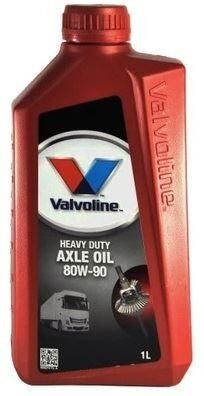
Valvoline 868209 Differential oilOil: Mineral Oil; Capacity [litre]: 1; Container Type: Bottle; Oil Viscosity Classification SAE: 80W-90; API: API GL-5; Vehicle type: Trucks, Car; Transmission Type: Differential Gear with limited slip; Transmission Type: Manual Transmission, Automatic Transmission, CVT automatic transmission (stepless), Transaxle transmission, Manual Transmission, automatically operated; Specification: API GL-5; Manufacturer recommendations: ZF TE-ML 07A, ZF TE-ML 08, ZF TE-ML 05C, ZF TE-ML 21C; Product line: Heavy Duty Axle; Version: Pro LS; Liquid: ; Transmission Number: 5/1, R15M-D 5/1, 4/1, JB2 4/1, JB3 5/1, NG9 5/1, S5-24 5/1, 6/1, F5MBB 5/1, G40 5/1, G52 5/1, M15M-D 5/1, Y16M-D 6/1, G54 5/1, L40 5/1, L42 5/1, M15 MX-D 5/1, R15MX-D 5/1, G35M-R 5/1, G36M-R 6/1, F35M-R 5/1, G66M-R 6/1, H233B, Dana M60, Dana M77FF, AD4, (4x4), LT230T, GF1A, LT230QRS, 10365, ACD, TY20A, TY21C, TY30A, TY40A, SCAM 310-20000, TC 400, TY21D, 1/1, 2180 5AMT 5/1; Fill quantity [l]: 2,6, 1,85, 2,8, 3,25, 3,4, 2,2, 2,5, 2,4, 1,35, 2,1, 2,3, 3,2, 5, 2,55, 4,2, 4,8, 3, 1,9, 5,2, 2,68, 3,35, 1,7, 2, 2,7, 3,5, 3,3, 4, 9,5, 5,5, 3,55, 1,1, 2,9, 3,9, 1,75, 1,55, 1,5, 4,1, 2,87, 3,04, 2,95, 3,7, 2,25, 1, 1,3, 1,4, 0,5, 0,8, 1,8, 1,6, 0,55, 0,7, 0,85, 1,2, 0,65, 1,65, 0,9, 1,05, 1,95, 0,6, 0,95, 0,75, 1,25, 1,15, 3,15, 0,47, 3,45, 1,24, 1,96, 1,43, 0,12, 3,8, 0,81, 3,65, 2,27, 0,4, 3,05, 0,45, 3,1, 2,85, 0,49, 0,3, 0,58, 0,53, 0,36, 0,51, 0,35, 0,62, 0,31, 0,38, 0,54, 0,43, 0,37, 0,25, 0,57, 0,14, 0,2, 0,13, 0,18; Fill quantity from [l]: 3,25, 2,4, 2,2, 1,9, 3,35, 2, 3,5, 3,9, 1,7, 1,75, 3,3, 2,5, 1,8, 0,8, 1,3, 1,2, 1,4, 1,6, 0,55, 0,4, 1,05, 1,15, 1,5, 2,6, 1,43, 0,39, 0,9, 0,65, 0,7, 1,35, 2,3, 1, 3,4, 2,35, 2,7, 0,5, 3, 2,25, 1,1, 2,1, 0,49, 0,43, 0,45, 0,36, 0,54, 0,37, 0,47, 2,8; Fill capacity to [l]: 3,4, 2,8, 2,4, 2,2, 2,6, 2,5, 4, 4,1, 2, 3,5, 3,2, 3,7, 1,3, 1,6, 1,8, 1,5, 1,75, 3,1, 0,8, 0,5, 1,9, 2,7, 2,3, 1,15, 2,1, 1,85, 1,73, 0,43, 1,1, 0,75, 1,7, 1,35, 0,9, 1,65, 3,25, 3, 1, 3,05, 5,2, 0,55, 5,1, 2,75, 1,4, 1,2, 0,45, 0,6, 0,54, 0,38, 0,4, 0,47, 0,69, 3,3; Model Year from: 1984, 1987, 2019, 1996, 1986, 1985, 1989, 2001, 2000, 1995, 2003, 2007, 2009, 2010, 2006, 2011, 2002, 2004, 2005, 2008, 2012, 2013, 2014, 2015, 1999; Model Year to: 1986, 1993, 2022, 2002, 1999, 1989, 1991, 1998, 2003, 2006, 2011, 2010, 2012, 1994, 1990, 2000, 2008, 1997, 2007, 2014, 2013, 2005, 2001, 2009, 2019, 2021, 2015, 2016, 2018, 2017; Transmission Code: manual/transferbox, Gearbox, C200, Differential, 4x2, Reduction Units, 4x4, Conventional Differ., Overrunning clutch, With RFS, transferbox, automatic/transferbx, transferbox (4x4); Vehicle Equipment: for vehicles with power take-off, for vehicles with limited slip differential, for vehicles without engageable all-wheel drive, for vehicles with engageable all-wheel drive; Fitting Position: Rear Axle, Front Axle; Manufacturer Restriction: Differential, Long Wheelbase, Standard Wheelbase, Conventional, Differen.,W/O ADD., Final drive, Oil lubricated,...18,49 £*Shipping: 8,45 £Secure redirect to the provider
-
MPM 10001LS Differential oilOil Viscosity Classification SAE: SAE 90; Capacity [litre]: 1; Container Type: Bottle; Vehicle type: Car; Transmission Type: Differential Gear with limited slip; Oil: Mineral Oil; Specification: API GL-5; Manufacturer recommendations: Ford ESW-M2C104-A, ZF TE-ML 16C, ZF TE-ML 16E; Version: Limited Slip; Liquid: ; Fill quantity [l]: 0,9, 0,7, 1,7, 0,8, 1, 1,3, 2,8, 1,4, 2,2, 0,75, 1,2, 1,1, 1,6, 2, 2,6, 1,5, 1,8, 3,5, 1,55, 1,35, 3, 2,1, 2,3, 0,85, 3,2, 1,25, 3,3, 2,7, 1,85, 1,9, 2,5, 3,4, 3,35, 0,65, 1,65, 1,05, 5,4, 1,95, 3,25, 1,15, 0,5, 3,55, 2,4, 4, 0,74, 3,45, 5,2, 2,9, 1,96, 0,83, 3,1, 0,6, 0,55, 2,01, 1,98, 3,8, 2,65, 2,95, 0,51, 0,45, 0,62, 0,38, 0,54, 0,43, 0,41, 0,25, 0,15, 0,35, 0,28, 0,2, 0,4, 0,18; Model Year from: 1988, 1989, 1984, 1995, 1994, 2006, 2007, 1993, 2003, 2005, 2000, 1997, 2008, 2009, 2002, 1998, 2012, 2004, 2013, 2011, 1990, 1996; Model Year to: 1991, 1990, 1986, 1997, 2000, 2008, 2009, 2005, 2007, 2003, 1998, 2010, 2006, 2004, 2001, 2012, 2019, 2011, 2016, 2013, 2014, 2015, 2017, 1992, 1999; Fitting Position: Rear Axle; Fill quantity from [l]: 1,8, 2,85, 1,3, 1,2, 1,7, 1,6, 0,45, 1,05, 1, 0,39, 0,65, 2,5, 2,4, 1,15, 0,6, 0,9, 0,8, 0,7, 2,2, 2,3, 3,15, 2,35, 3,3, 1,4, 2,6, 3, 0,43, 0,55, 0,4; Fill capacity to [l]: 2, 3,05, 1,6, 1,8, 2,7, 1,75, 1,9, 0,55, 1,15, 2,3, 2,6, 1,5, 0,43, 0,75, 3,1, 3, 1,35, 0,8, 1,1, 0,9, 3,25, 2,95, 1,4, 3,4, 3,2, 5,1, 0,45, 0,6, 0,5; Transmission Number: 4/1, 5/1, G36M-R 6/1, (4x4); Vehicle Equipment: for vehicles with diesel particulate filter (DPF)27,99 £*Shipping: 8,45 £Secure redirect to the provider
-
How can one guess solutions to differential equations?
One can guess solutions to differential equations by looking for patterns and similarities between the given equation and known solutions. This can involve trying different types of functions, such as exponential, trigonometric, or polynomial functions, and seeing if they satisfy the differential equation. Additionally, one can use initial conditions or boundary conditions to guide the guessing process and narrow down the possible solutions. It may also be helpful to use known techniques and methods for solving specific types of differential equations, such as separation of variables or integrating factors, to guide the guessing process. **
-
What are solutions of a homogeneous linear differential equation?
The solutions of a homogeneous linear differential equation are functions that satisfy the differential equation and its initial conditions. These solutions form a vector space, meaning that any linear combination of solutions is also a solution. The general solution of a homogeneous linear differential equation is a linear combination of the fundamental solutions, which are a set of linearly independent solutions that form a basis for the solution space. The number of fundamental solutions is equal to the order of the differential equation. **
-
What is differential calculus?
Differential calculus is a branch of mathematics that deals with the study of rates at which quantities change. It involves the concept of derivatives, which represent the rate of change of a function at a given point. Differential calculus is used to solve problems involving motion, optimization, and many other real-world applications where understanding how quantities change over time is important. It is a fundamental tool in mathematics and is essential in fields such as physics, engineering, economics, and biology. **
-
What is differential covariance?
Differential covariance refers to the difference in the covariance between two variables across different groups or conditions. It is used to assess whether the relationship between two variables varies depending on different levels of a third variable. This can help to identify how the strength and direction of the relationship between two variables may change under different circumstances or conditions. Differential covariance is important in understanding how different factors may influence the relationship between variables in a given context. **
Similar search terms for Differential
-
MOTUL 110870 Differential oilCapacity [ml]: 150; Oil Viscosity Classification SAE: 85W-140; Vehicle type: Car, Motorcycle; Transmission Type: Differential Gear, Differential Gear with limited slip, Manual Transmission; Supplementary Article / Supplementary Info Info 2: for difficult operating conditions; Specification: API GL-4, API GL-5; Product line: Scooter Gear; Container Type: Tube; Liquid: ; Transmission Number: 5/1; Fill quantity [l]: 1, 1,3, 1,1, 1,9, 1,25, 1,4, 2,2, 3, 1,8, 1,35, 1,5, 0,16, 0,1, 0,17, 3,1, 3,2, 0,09; Model Year from: 2002, 2005, 2006, 2011, 2009, 2010, 2012, 2014, 2013, 2017, 2018; Model Year to: 2009, 2005, 2007, 2006, 2011, 2013, 2012, 2015, 2014, 2017, 2016, 2018; Fill quantity from [l]: 1,3, 1,4, 1,2, 1,35, 1,8, 1,9, 3, 2,2, 3,2, 0,1, 2,1; Fill capacity to [l]: 1,3, 1,4, 1,5, 3,3, 1,8, 1,35, 1,9, 3, 2,2, 0,1110,49 £*Shipping: 8,45 £Secure redirect to the provider
-
TEDGUM TED82289 Differential mountShore-A hardness value, base body: 80; Outer Diameter [mm]: 43; Weight [kg]: 0,124; Required quantity: 1; Fitting Position: Rear Axle Right, Rear Axle Left; Supplementary Article / Supplementary Info Info 2: with grease cap; Material: PU (Polyurethane); Colour: red; Inner Diameter [mm]: 1038,99 £*Shipping: 8,45 £Secure redirect to the provider
-
What are differential calculations?
Differential calculations involve the process of finding the rate of change of a quantity with respect to another quantity. This can be done using techniques such as differentiation, which involves finding the derivative of a function. These calculations are used in various fields such as physics, engineering, economics, and biology to analyze how one quantity changes in relation to another. Differential calculations are essential for understanding and predicting the behavior of systems and processes in the real world. **
-
What are differential tasks?
Differential tasks are tasks that require different levels of skill, knowledge, or expertise to complete. These tasks are often assigned to individuals based on their abilities and strengths, with the goal of maximizing efficiency and productivity. By assigning differential tasks, organizations can ensure that each task is being completed by the most qualified individual, leading to better overall performance. This approach also allows for the development and utilization of diverse skill sets within a team or organization. **
-
When can I activate which lock, the differential lock or the locking differential?
The differential lock is typically activated in off-road or low-traction situations where one wheel is spinning freely while the other is not receiving power. This helps to evenly distribute power to both wheels for better traction. On the other hand, the locking differential is usually engaged in high-traction situations where both wheels need to rotate at the same speed, such as when driving on a straight road or during high-speed maneuvers. It is important to refer to your vehicle's manual for specific guidelines on when to activate each type of lock. **
-
What is the differential taxation?
Differential taxation is a tax system in which different types of income or assets are taxed at different rates. This can include progressive tax rates based on income levels, as well as varying tax rates for different types of investments or assets. The goal of differential taxation is often to create a more equitable tax system by ensuring that those with higher incomes or wealth pay a higher percentage of their earnings in taxes. This can also be used as a tool to incentivize certain behaviors, such as investing in specific industries or saving for retirement. **
* All prices are inclusive of VAT and, if applicable, plus shipping costs. The offer information is based on the details provided by the respective shop and is updated through automated processes. Real-time updates do not occur, so deviations can occur in individual cases. ** Note: Parts of this content were created by AI.