Buy businessdata.eu ?
We are moving the project
businessdata.eu .
Are you interested in purchasing the domain
businessdata.eu ?
domain@kv-gmbh.de · 0541-91531010
Buy businessdata.eu ?
What is the best strategy to memorize number sequences?
The best strategy to memorize number sequences is to break the sequence into smaller chunks or patterns that are easier to remember. You can also create associations or visual images for each number to help with recall. Practice repetition and recitation of the sequence regularly to reinforce your memory. Additionally, using mnemonic devices or memory techniques such as the Method of Loci or the Major System can be helpful in memorizing number sequences. **
What is the best strategy for memorizing number sequences?
The best strategy for memorizing number sequences is to use mnemonic devices or memory aids. This could involve creating a story or a rhyme using the numbers, or associating each number with a specific image or object. Breaking the sequence into smaller chunks and practicing them repeatedly can also help in memorization. Additionally, using visualization techniques or creating a mental map of the sequence can aid in retention. Finally, regular practice and repetition are key to solidifying the memory of number sequences. **

Similar search terms for Sequences
Top-Angebote
Products related to Sequences:
-
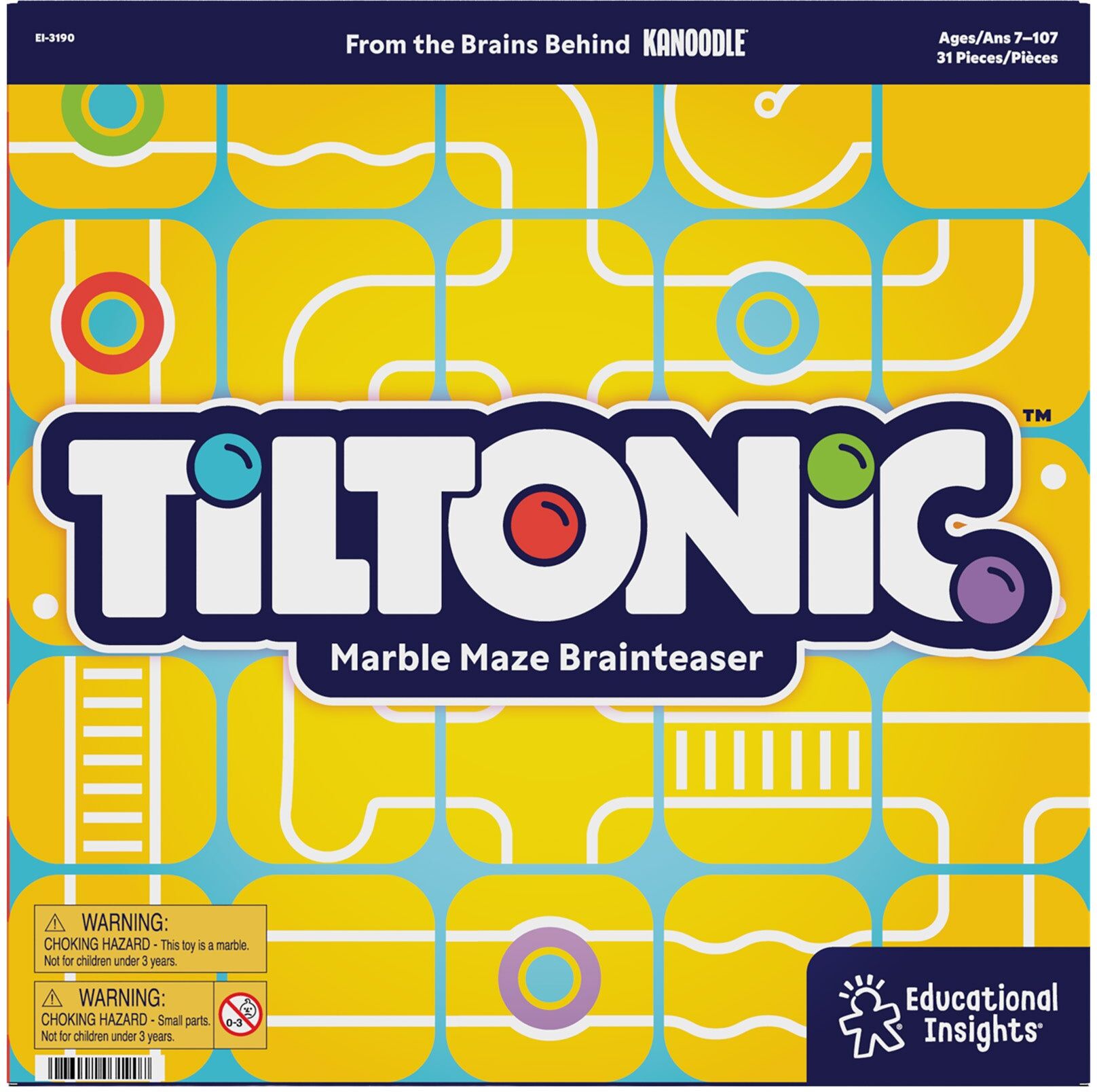
Educational Insights Tiltonic Marble Maze Brainteaser for Ages 7+Challenge your problem-solving skills with the Educational Insights Tiltonic Marble Maze Brainteaser. This two-stage puzzle combines maze-building with hands-on marble play, creating a fun challenge for children aged 7 and up. Start by studying one of the included challenge puzzles and arranging the adjustable track pieces on the turquoise game board to create the correct route. Once the maze is ready, tilt the board carefully to guide the four colorful marbles through the track and into their matching destinations. Each challenge encourages players to think ahead, test ideas, and refine their solution. With 50 puzzle challenges, 25 adjustable track pieces, and four marbles, Tiltonic offers plenty of replay value. Children can also design their own marble mazes once they have mastered the included puzzles. The tactile format makes it an engaging alternative to screen-based entertainment while encouraging creativity, logic, critical thinking, and hand-eye coordination.13,89 £*Shipping: 3,95 £Secure redirect to the provider
-
DEVERA Hanger and Full-length Mirror IntegrationSpecification Main Material: Rubber Wood,Solid Wood,Wood+Glass Product Style: American Design,Art Deco,Artsy,Contemporary,European Product Features Product Information: Full-length mirror, solid wood + rubber wood + glass, 65.7*17.7in (mirror width:…302,39 $*Shipping: 0,00 $Secure redirect to the provider
-
Innovation: Fourth Edition Board Game by Asmadi Games for 2-4 PlayersInnovation: Fourth Edition is a strategic card game for 2–4 players. Build a civilization through ideas, inventions, and cultural advances by developing technologies and sharing achievements. Each card can provide different benefits depending on how it's used, creating varied strategies and unexpected shifts throughout the game. This edition includes updated artwork and streamlined rules for the expansions, as well as Age 11 cards for each set and the new expansion, The Unseen, which adds further possibilities to the core experience. With hundreds of cards and numerous combinations, every game can unfold differently.18,09 £*Shipping: 3,95 £Secure redirect to the provider
-
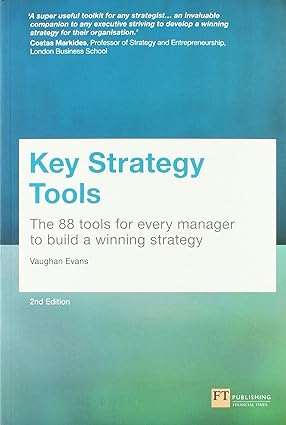
Pearson Key Strategy Tools by Vaughan Evans - 88 Tools for Every Manager to Build a Winning Strategy - Paperback - Business Strategy BookKey Strategy Tools by Vaughan Evans is a comprehensive guide for managers who want to build a winning strategy. Written by strategy consultant Vaughan Evans, this book distils decades of consulting experience into 88 practical tools covering every stage of the strategy process. From market analysis to competitive positioning and implementation, it equips managers, entrepreneurs, and MBA students with a framework for transforming their business into a scalable and valuable asset. The book presents a complete toolkit for strategy development, helping readers to understand why some companies succeed while others struggle, and providing actionable advice on how to achieve success. Published by Pearson, this paperback is a valuable resource for anyone looking to improve their business strategy.2,99 £*Shipping: 2,99 £Secure redirect to the provider


-
What are sequences needed for?
Sequences are needed for organizing and storing data in a specific order. They are useful for maintaining the order of elements and accessing them based on their position. Sequences are commonly used in programming to represent lists of items, such as numbers, strings, or objects. They provide a structured way to work with collections of data efficiently. **
-
What are GPU clock sequences?
GPU clock sequences refer to the specific frequencies at which a graphics processing unit (GPU) operates. These sequences determine the speed at which the GPU processes data and performs calculations, affecting the overall performance of the graphics card. GPU clock sequences typically consist of a base clock frequency and a boost clock frequency, with the boost clock allowing the GPU to temporarily operate at higher speeds for demanding tasks. Adjusting these clock sequences can impact the power consumption, heat generation, and performance of the GPU. **
-
What are the barcode sequences?
Barcode sequences are unique DNA sequences that are used to label and identify individual samples in high-throughput experiments, such as next-generation sequencing. These barcodes are typically short, specific sequences of nucleotides that can be attached to DNA fragments or other biological molecules. By using different barcode sequences for each sample, researchers can pool multiple samples together and then later identify and separate the individual samples based on their unique barcode sequences. This allows for efficient and accurate processing of large numbers of samples in parallel. **
-
What are Java sequences and series?
In Java, sequences and series refer to a collection of numbers that follow a specific pattern or rule. A sequence is an ordered list of numbers, while a series is the sum of the terms in a sequence. Java provides various ways to generate and manipulate sequences and series, such as using loops, arrays, or mathematical formulas. These concepts are commonly used in programming to perform calculations, analyze data, or solve mathematical problems. **

How to solve inequalities with sequences?
To solve inequalities with sequences, you can first find the general term of the sequence and then use it to determine the behavior of the sequence. You can then use this information to solve the inequality by comparing the terms of the sequence to the inequality. If the sequence is increasing or decreasing, you can use this information to determine the range of values that satisfy the inequality. Finally, you can use the solution to the inequality to find the specific terms of the sequence that satisfy the inequality. **
What are null sequences in mathematics?
Null sequences in mathematics are sequences of numbers that approach zero as the index of the sequence increases. In other words, as the sequence goes on, the terms get closer and closer to zero. Null sequences are important in the study of limits and convergence in calculus and analysis. They help us understand the behavior of sequences and their tendency to approach a specific value or limit. **
Top-Angebote
Products related to Sequences:
-
Hanabi Cooperative Card Game by R & R Games, 5 Color Sequences, Teamwork and DeductionHanabi is a cooperative card game where players work together to create complete sequences of fireworks cards. Each player holds their cards facing away from them, so they must rely on indirect clues to help their teammates decide which cards to play, discard or keep. Players take turns giving carefully limited clues about color or number, and must use their information tokens thoughtfully because mistakes are costly. To play, give another player a clue about their cards, play a card to build a firework sequence, or discard a card to recover an information token. The goal is to work together to complete the five color sequences. Hanabi offers a compact and thoughtful game experience for players who enjoy deduction, teamwork, and careful decision-making.9,39 £*Shipping: 3,95 £Secure redirect to the provider
-
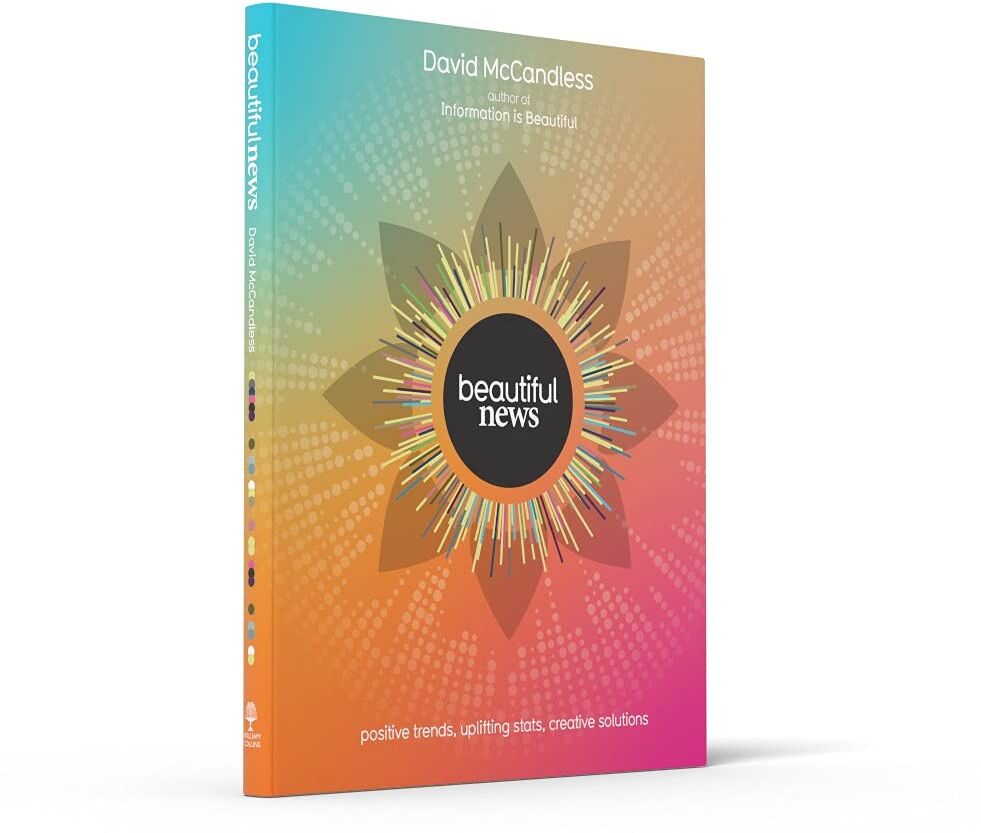
William Collins Beautiful News: Positive Trends, Uplifting Stats, Creative Solutions by David McCandlessIn this fascinating follow-up to the bestselling Information is Beautiful and Knowledge is Beautiful, the king of infographics David McCandless uses spectacular visuals to give us all a bit of good news. We are living in the Information Age, in which we are constantly bombarded with data – on television, in print and online. How can we relate to this mind-numbing overload? Enter David McCandless and his amazing infographics: simple, elegant ways to understand information too complex or abstract to grasp any way but visually. In his unique signature style, he creates dazzling displays that blend facts with their connections, contexts and relationships, making information meaningful, entertaining – and beautiful. In his highly anticipated third book, McCandless illustrates positive news from around the world, for an informative, engaging and uplifting collection of new infographic art.5,99 £*Shipping: 2,99 £Secure redirect to the provider
-
Educational Insights Tiltonic Marble Maze Brainteaser for Ages 7+Challenge your problem-solving skills with the Educational Insights Tiltonic Marble Maze Brainteaser. This two-stage puzzle combines maze-building with hands-on marble play, creating a fun challenge for children aged 7 and up. Start by studying one of the included challenge puzzles and arranging the adjustable track pieces on the turquoise game board to create the correct route. Once the maze is ready, tilt the board carefully to guide the four colorful marbles through the track and into their matching destinations. Each challenge encourages players to think ahead, test ideas, and refine their solution. With 50 puzzle challenges, 25 adjustable track pieces, and four marbles, Tiltonic offers plenty of replay value. Children can also design their own marble mazes once they have mastered the included puzzles. The tactile format makes it an engaging alternative to screen-based entertainment while encouraging creativity, logic, critical thinking, and hand-eye coordination.13,89 £*Shipping: 3,95 £Secure redirect to the provider
-
DEVERA Hanger and Full-length Mirror IntegrationSpecification Main Material: Rubber Wood,Solid Wood,Wood+Glass Product Style: American Design,Art Deco,Artsy,Contemporary,European Product Features Product Information: Full-length mirror, solid wood + rubber wood + glass, 65.7*17.7in (mirror width:…302,39 $*Shipping: 0,00 $Secure redirect to the provider
-
What is the best strategy to memorize number sequences?
The best strategy to memorize number sequences is to break the sequence into smaller chunks or patterns that are easier to remember. You can also create associations or visual images for each number to help with recall. Practice repetition and recitation of the sequence regularly to reinforce your memory. Additionally, using mnemonic devices or memory techniques such as the Method of Loci or the Major System can be helpful in memorizing number sequences. **
-
What is the best strategy for memorizing number sequences?
The best strategy for memorizing number sequences is to use mnemonic devices or memory aids. This could involve creating a story or a rhyme using the numbers, or associating each number with a specific image or object. Breaking the sequence into smaller chunks and practicing them repeatedly can also help in memorization. Additionally, using visualization techniques or creating a mental map of the sequence can aid in retention. Finally, regular practice and repetition are key to solidifying the memory of number sequences. **
-
What are sequences needed for?
Sequences are needed for organizing and storing data in a specific order. They are useful for maintaining the order of elements and accessing them based on their position. Sequences are commonly used in programming to represent lists of items, such as numbers, strings, or objects. They provide a structured way to work with collections of data efficiently. **
-
What are GPU clock sequences?
GPU clock sequences refer to the specific frequencies at which a graphics processing unit (GPU) operates. These sequences determine the speed at which the GPU processes data and performs calculations, affecting the overall performance of the graphics card. GPU clock sequences typically consist of a base clock frequency and a boost clock frequency, with the boost clock allowing the GPU to temporarily operate at higher speeds for demanding tasks. Adjusting these clock sequences can impact the power consumption, heat generation, and performance of the GPU. **
Similar search terms for Sequences
-
Innovation: Fourth Edition Board Game by Asmadi Games for 2-4 PlayersInnovation: Fourth Edition is a strategic card game for 2–4 players. Build a civilization through ideas, inventions, and cultural advances by developing technologies and sharing achievements. Each card can provide different benefits depending on how it's used, creating varied strategies and unexpected shifts throughout the game. This edition includes updated artwork and streamlined rules for the expansions, as well as Age 11 cards for each set and the new expansion, The Unseen, which adds further possibilities to the core experience. With hundreds of cards and numerous combinations, every game can unfold differently.18,09 £*Shipping: 3,95 £Secure redirect to the provider
-
Pearson Key Strategy Tools by Vaughan Evans - 88 Tools for Every Manager to Build a Winning Strategy - Paperback - Business Strategy BookKey Strategy Tools by Vaughan Evans is a comprehensive guide for managers who want to build a winning strategy. Written by strategy consultant Vaughan Evans, this book distils decades of consulting experience into 88 practical tools covering every stage of the strategy process. From market analysis to competitive positioning and implementation, it equips managers, entrepreneurs, and MBA students with a framework for transforming their business into a scalable and valuable asset. The book presents a complete toolkit for strategy development, helping readers to understand why some companies succeed while others struggle, and providing actionable advice on how to achieve success. Published by Pearson, this paperback is a valuable resource for anyone looking to improve their business strategy.2,99 £*Shipping: 2,99 £Secure redirect to the provider
-
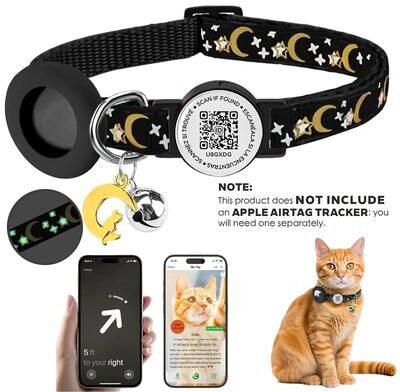
Uplift Essentials Triple Safety AirTag Integration Collar blackKeep your pet protected with the ultimate hightech security accessory: the TripleSafety AirTag Integration Collar. This isn't just a stylish neckband; its a comprehensive tracking and identification system designed to give you total peace of mind....56,97 $*Shipping: 0,00 $Secure redirect to the provider
-
DEVERA Hanger and Full-length Mirror IntegrationSpecification Main Material: Rubber Wood,Solid Wood,Wood+Glass Product Style: American Design,Art Deco,Artsy,Contemporary,European Product Features Product Information: Full-length mirror, solid wood + rubber wood + glass, 65.7*17.7in (mirror width:…277,49 $*Shipping: 0,00 $Secure redirect to the provider
-
What are the barcode sequences?
Barcode sequences are unique DNA sequences that are used to label and identify individual samples in high-throughput experiments, such as next-generation sequencing. These barcodes are typically short, specific sequences of nucleotides that can be attached to DNA fragments or other biological molecules. By using different barcode sequences for each sample, researchers can pool multiple samples together and then later identify and separate the individual samples based on their unique barcode sequences. This allows for efficient and accurate processing of large numbers of samples in parallel. **
-
What are Java sequences and series?
In Java, sequences and series refer to a collection of numbers that follow a specific pattern or rule. A sequence is an ordered list of numbers, while a series is the sum of the terms in a sequence. Java provides various ways to generate and manipulate sequences and series, such as using loops, arrays, or mathematical formulas. These concepts are commonly used in programming to perform calculations, analyze data, or solve mathematical problems. **
-
How to solve inequalities with sequences?
To solve inequalities with sequences, you can first find the general term of the sequence and then use it to determine the behavior of the sequence. You can then use this information to solve the inequality by comparing the terms of the sequence to the inequality. If the sequence is increasing or decreasing, you can use this information to determine the range of values that satisfy the inequality. Finally, you can use the solution to the inequality to find the specific terms of the sequence that satisfy the inequality. **
-
What are null sequences in mathematics?
Null sequences in mathematics are sequences of numbers that approach zero as the index of the sequence increases. In other words, as the sequence goes on, the terms get closer and closer to zero. Null sequences are important in the study of limits and convergence in calculus and analysis. They help us understand the behavior of sequences and their tendency to approach a specific value or limit. **
* All prices are inclusive of VAT and, if applicable, plus shipping costs. The offer information is based on the details provided by the respective shop and is updated through automated processes. Real-time updates do not occur, so deviations can occur in individual cases. ** Note: Parts of this content were created by AI.